Category: Musings
Losing Control of the Wheel
I recently read about the dismantling of the Engineering Library at the Chrysler Technical Center. Stories like that are always sad; what is lost can never be recovered or rebuilt. With the advancements in digital archiving and paperless storage, archives need never be destroyed; even if a company like Chrysler, or its ownership group, blanches at the cost of maintaining a library, historic documents can almost always find a home at a museum or research institution. Was the University of Michigan even contacted before the library was shuttered and its archives given out in piecemeal?
Technology has changed the game for archivists. The destruction of Ashurbanipal’s Library at Nineveh was inevitable with the changing tides of Empire. Locals were still pilfering the stones of Ashurbanipal’s palace thousands of years later when assyriologist and adventurer George Smith arrived to extract the clay cuneiform tablets that make up the majority of our knowledge of the ancient Assyrians. The fiery demise of the Great Library of Alexandria was also inevitable in an age when urban fires were a daily reality in the overcrowded cities of Antiquity. But we live in a different era: the only threat to the record of our past is our own negligence. The cost of preserving that library - or finding a research institution to donate it to, without dismantling the collection - is a pittance compared to the factory costs and other overhead at a corporation like Chrysler.
The history of the automobile is one of the vital stories of American history. While I’ve never been a car aficionado (I’m more seduced by the click and hum of a freewheel and gears - the quiet grace of the bicycle - than by the cough and sputter of the internal combustion engine), you can’t look at the 20th century without an appreciation of the automobile’s influence. It has irrevocably changed and suburbanized American culture and had a powerful jump-start effect on the mid-century American economy (both in the twenties and fifties). To lose documentation of those eras is to lose control of the wheel.
You can never look forward if you can’t look behind. Hopefully Chrysler’s remaining archives, and the comparable archives at General Motors, will be preserved.
Thanks to KB for the tip.
Facebook tearing down its walls?
According to this report, Facebook is about to make a dramatic change - a far more dramatic decision than the two controversial user-interface changes of the past year. Updates will soon be public by default, and searchable ala Twitter. The user will have to specify through a drop-down mechanism if they want their actions to be private.
This is clearly another move (along this Spring’s change to the User Interface and the addition of Vanity URLs) towards the functionality of Twitter. Within Twitter, users can search across the medium for trending topics, terms, or people with ease; historically, Facebook is built with walls to protect networks of friends.
Facebook’s obsession with moving in on Twitter’s territory is puzzling. It’s true that the small (and profitless) start-up has gotten a lot of publicity lately, both for its celebrity users and its ability to quickly spread news from all parts of the globe (Iranian protests in June, Mumbai attack last year). But Facebook’s growth is predicated on different strengths: private networks, photo albums, “real” people (empasizing real names over user names, for instance). Twitter doesn’t threaten any of those strengths.
Because of its greater security, far more personal information is included on facebook pages than Twitter. As Facebook is nothing without this user-generated content, it’s an open question if breaking down those defensive walls (and infuriating its persnickety users) is a good idea. Concerns over privacy are the #1 cited concern about Facebook, and this move seems to be ignoring that issue entirely.
I wonder if Facebook is taking one step too far away from what made it work, and if this will create an opening for another social network to take its place, as Myspace supplanted Friendster and Facebook supplanted Myspace.
Perspective
In an early post on The Pinakes I featured a photo I had taken of the Reading Room of the New York Public Library. This photo also serves as the desktop image on my home computer and the backdrop for The Pinakes twitter feed.
The NYPL recently featured a blog post featuring archival photos of its iconic reading room, and I was pleased to see a photo from almost the exact same perspective as the one from my picture taken a year ago.
The original blog post, entitled “The Historical Perspective” is well worth a read and can be found here.
Welcome, Redux
Welcome, again.
The Pinakes has found new life. Originally born as a class project, I have elected to migrate it to its own URL and server. Its purpose remains the same: The Pinakes will serve as a public forum for my thoughts on history, the library craft, and information management, and all the connections betwixt and between.
Over the course of the Spring 2009 semester, the topics tackled and tools used were guided by the class syllabus; from this point forward my posts will be guided only by my own inspiration. In addition to items relating directly to Library Science, I may also touch on other topics of interest to me: theater and dramaturgy, art and design, literature, music and more. I hope only to keep it interesting.
Please feel free to take a look through the material already posted, and bookmark The Pinakes here in its new home. You can also add it to your Reader by clicking on the “Subscribe: RSS Blog” button to the left!
Unfurling their flag
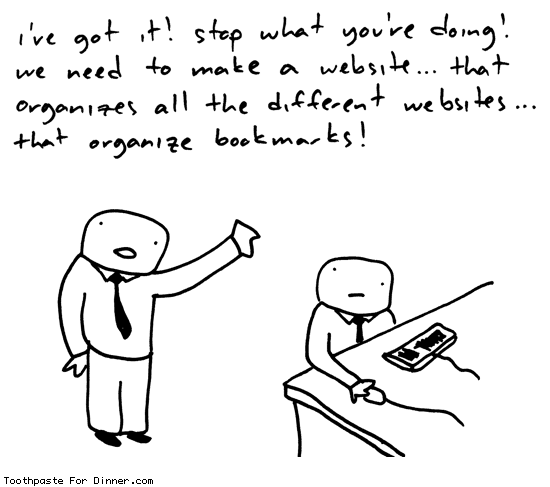
To update my post on social bookmarking, it would seem I reviewed a short-lived service in furl. It has now been absorbed by diigo, which calls itself a web “highlighter”. Such is the nature of the world wild web.
Furl informed me by email that:
The Furl team is very pleased to announce that Furl has become part of Diigo.com. We worked hard to find Furl a home where loyal users like you could continue to benefit from best-of-breed social bookmarking and annotation tools. Hands down, Diigo.com was the winner due to its innovative approach to online research tools and knowledge sharing.
The Diigo team is dedicated to making sure you continue to get top notch features and service. They’ve got a crack team of technologists who love making research and knowledge sharing as easy and efficient as possible. Exporting your data from Furl to Diigo is super easy.
We feel fortunate to have been able to serve as your social bookmarking site provider and can’t thank you enough for your loyal support over the past four years. We’ll miss you and we wish you the best as part of the Diigo community.
I wonder if diigo would get my vote over delicious?
Read Delicious

Looks tasty, does it not? Delicious, perhaps? Del.icio.us (and its newer, friendlier to the eye url, delicious.com) has become one of the poster children for “Web 2.0″ applications. Why is it so popular? What advantages does it offer? What makes it so tasty?
I would posit the single biggest reason for its popularity is its portability. Few heavy internet users - the omnivores of the ether - spend their whole time using one computer. Many have a computer at work, and a computer at home. Perhaps both a desktop and a laptop, or a Mac and a PC. For users with more than one computer, Delicious offers one simple, elegant solution to retaining bookmarks; instead of lodging them all in a browser or browser toolbar, contained to one machine, their bookmarks are automatically transferred to an online database and retrievable from any machine. It’s one of the key principles of “cloud computing“, and Delicious does it simply and intuitivly.
While I believe that is Delicious’ single most appealing aspect, it certainly isn’t the end of its usefulness. In fact, the system is designed to be much more: a human-powered search algorithm, encouraging its educated user-base to tag their favorite pages across the wide expanse of the internet frontier. By applying folksonomic tags to every page, the users provide the means to search terms for sites already approved of by discerning readers. It’s an end-around to Google’s computer driven matrix and can help bypass commercial junk in favor of genuine, interesting pages.
So naturally I searched for my own page to see what would come up. Specifically, the word pinakes. Now, I certainly own no copyright to the word; it is ancient in origin and naturally appealing to librarians, archivists and catalogers so I was not surprised by the range of pages returned in a Delicious search. Amongst its 46 appearances, it brought me to search portals, a model database for scientific artifacts (that one seemed particularly cool: I might tag it myself), a Spanish-language online education periodical, an art blog in a Cyrillic alphabet (which language I could not say, nor its relation to the pinakes), a wiki-manual for an Italian information database, and even two bookmarks pointing to this humble blog - and I’m only responsible for one of them. I have a reader! The user in question, who I do not know, thought to tag this website under “web”, “2.0″, and “library” - not bad.
The ability to funnel users, networks or tags into RSS feeds only gives Delicious even greater versatility. As it continues to expand its user base, it will be interesting to see to what degree social bookmarking replaces the shotgun approach of traditional search engines.
